







Media Mayhem: 7 environmental stories that are free of doom and gloom
From an eco-city in China to a coffee producer in Uganda to ‘towers of power’ in Spain and California, some good news from the green frontier.

Climate change looks as if it’s coming quicker than previously imagined. The strongest response that our politicians can manage may actually be worse than taking no action. And a huge chunk of one state is expected simply to disappear — even if we do manage to take effective action against global warming.
With news like that, it’s easy to lose sight of hopeful news that’s lurking just outside the media’s spotlight. Often, it’s those hopeful stories — the ones that are about steady, quiet progress rather than political conflict — that make the larger difference in our lives.
And you don’t read about them after they’ve had their effect either. Who cares, for example, that “persistent organic pollutants” no longer show up in the bloodstreams of American women because the chemicals were banned 40 years ago and industry was able to find substitutes; or that new diesel engines required by the EPA put out just 10 percent of the soot and smog that they did just a few years ago.
Here are seven developments that may play a role in solving climate change and other burning problems of the future — and that may never get the headlines they deserve:
1) China’s building an eco-city. If you’ve been to China, “eco” isn’t the prefix you’d use before the word “city”: Some of the world’s worst smog. Neighborhoods that look like landfills. Landfills that look like somebody’s neighborhood. Toxic dumping into drinking-water sources. And an unfortunate, burgeoning love affair with sprawl. Oh, great.
An earlier attempt to wed New Urbanism to authoritarian planning on a mega-city scale flopped. But now, with the help of financiers from Singapore, the Chinese government is mapping out an ecotopia of 350,000.
Among the goals: recycle 60 percent of garbage; design the city and its buildings to conserve water; and cut down on car trips by 90 percent by building neighborhoods around an extensive light-rail network.
An eco-city in China would be a more relevant model for the rapidly growing cities in other developing countries than say Portland, Oregon. According to the Guardian, “investors said the 10-year scheme was intended to be ‘scalable and replicable’ so it could be used across China, India and other developing nations.”
2) Third World efforts to lock up carbon in trees may not be a Ponzi scheme after all. Exhibit A has got to be a project already underway in Ghana that’s designed to grow 24 million trees in exchange for carbon credits. The BBC reports:

The first million seedlings are being planted in a pilot scheme in an area that has been heavily logged in recent years. The trees are all tropical hardwoods, mostly indigenous, and it is believed this project could eventually become the largest of its kind.
Ghana — a West African democracy highlighted favorably this month in a visit by President Obama — has lost 80 percent of its tree cover over the last half century. That deforestation threatens to bring desert conditions to the small country and badly diminishes one of its most valuable natural resources.
Carbon-credit trading is derided by some as a shell game that allows multinational firms to pretend they’re offsetting emissions when they’re really doing what they’d do anyway. And some local environmentalists have expressed misgivings about the Ghana project. But ArborCarb, the British firm that’s behind this so far seems to be taking the right steps: It’s planting biologically diverse seedlings of indigenous trees, and is promising not to buy up land, but instead to empower local owners.
In the project’s life cycle, ArborCarb says, the new trees will suck up nine million metric tons of carbon.
3) Renewable energy is getting closer to “grid parity.” By their very nature, renewable systems suffer from a competitive disadvantage: They have a hard time storing energy to use when the wind’s calmed or the sun’s down.
But Yale University’s Environment 360 website reports that new storage approaches — among them advanced lithium-ion batteries, networks of batteries in homes, and “schemes to store energy as huge volumes of compressed air in vast geologic vaults” — are becoming more economically viable.
That’s a big step toward leveling the playing field between clean systems and the carbon-intensive systems that are so 20th century. Says Environment 360: “Large-scale electricity storage promises to be a game-changer, unshackling alternative energy.”
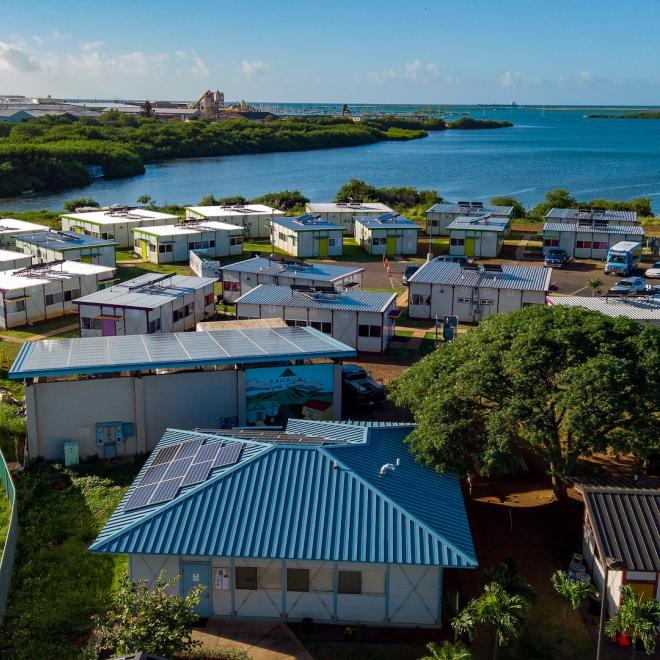
4) Large-scale solar plants seem to have a future. Grid parity certainly helps. But one of the brightest lights in the solar field is California-based BrightSource Energy, which is starting construction on the first of 14 planned plants that are expected to generate enough electricity to power 1.8 million homes.
Rather than using photovoltaic cells, BrightSource relies on mirrors that aim solar heat toward a central tower, where it’s used to create steam that then drives a turbine to generate electricity. Another company has operated a similar “tower of power” system near Seville, Spain, since 2007.
But plans for “concentrated” solar-energy farms of all sorts improves the odds that one technology could emerge as a replacement for coal.

5) At the same time, the prospect for solar systems in many homes looks better than ever. One reason is a 30 percent tax credit approved this year by Congress. Another reason is that manufacturers are finding less costly ways to make photovoltaic cells.

But grassroots ingenuity and marketing is an important part of bringing the solar panels to market. One Block of the Grid (1BOG) is a year-old San Francisco non-profit that helps neighbors join together to demystify the solar-installation process and to increase bargaining power with solar suppliers and. That can lower the cost to each home by around 30 percent.
1BOG already is expanding from California — where it claims to have helped nearly 12,000 homes move to solar — to Denver and New Orleans, with plans eventually to go national.
6) China is making a big commitment to clean energy. Yes, this is one story that’s gotten a bit of coverage — finally. But didn’t news that China’s invested $12 billion in renewable energy kind of sneak up on you?
The world’s most populous nation is supposed to be the place that’s putting a lump of coal in every pot and a dirty-coal power plant in every garage, right? And more development there threatens to swamp the combined carbon-reduction efforts of Western nations. That’s still the case.
All the more reason though that China’s seriousness about alternative energy truly is heartening. Utilities there already are supposed to generate three percent of their energy from renewables, and 15 percent by 2020. So far, projects range from household bio-digesters to laying the groundwork for the world’s largest wind farms.
The Chinese need to do more and to do it more quickly. But if the country’s investment in renewables results in breakthroughs that drive the cost of wind and solar below that of conventional methods, maybe the world’s biggest carbon-emitting country will be able to say bye-bye to coal plants someday.
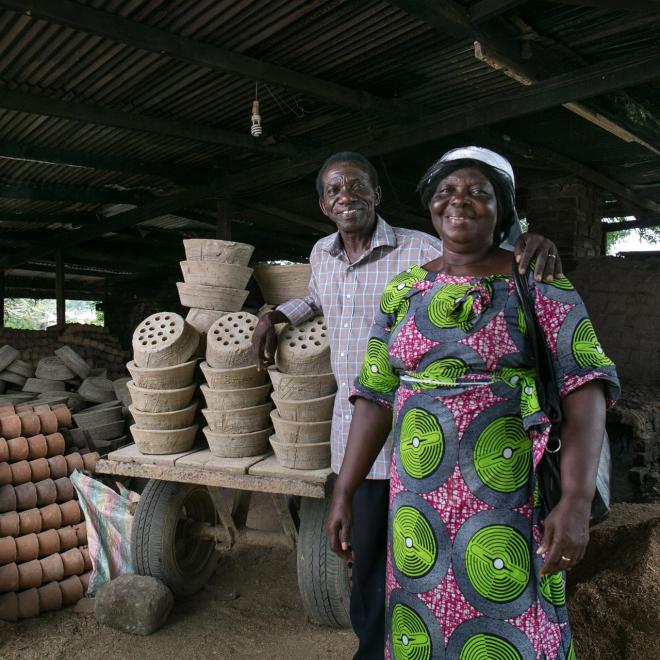
7) We’re all in this together. That’s the only thought I can come up with to characterize what simply is the inspirational story of a smalltime Uganda coffee roaster who produces non-char briquettes made from agricultural waste. No wonder Kampala Jellitone Suppliers Ltd. just won the Ashden International Award for Avoided Deforestation.
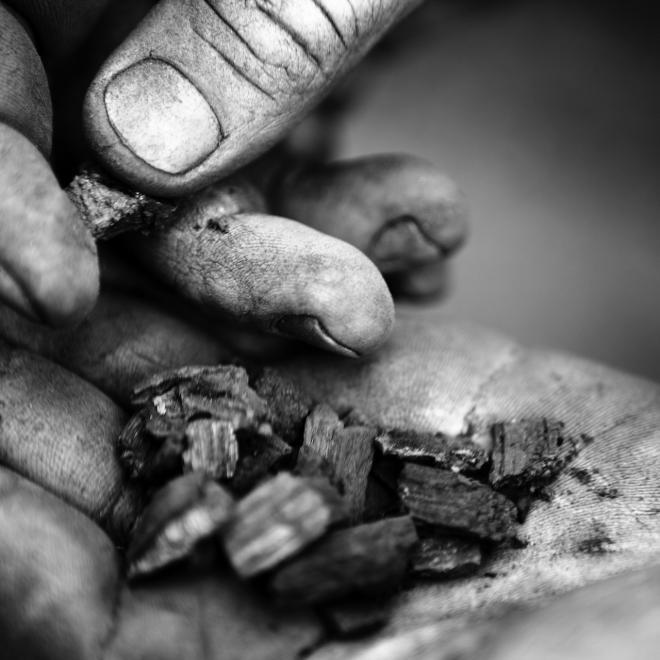
Abasi Musisi, the head of the coffee company, started using agriculture waste to create a briquette that burns cleaner and more efficiently that wood or charcoal. He started selling the briquettes to area businesses, and is now working to market them to homes.
In the award citation, Ashden International cites the company for reducing carbon dioxide emission by around 800 tons a month, while it also reduces deforestation in the Ugandan countryside and air pollution in the capital city of Kampala.
Ken Edelstein’s interest in the environment stems from hours of idle thoughts that drifted by while staring at the sky from a reclining position in a canoe. He’s been the editor of Creative Loafing, Atlanta’s alternative newsweekly; an environmental and political reporter for the Columbus (Ga.) Ledger-Enquirer; and the host of a radio talk show. His work, and the articles he’s edited, have won more than 40 journalism awards. He blogs on the environment in media and pop culture at cultofgreen.com. He also writes for MNN.com where this article was originally published.
Rap video encourages youth to go green
The Louisiana Green Corps and the Alliance for Affordable Energy have joined forces to create a rap video advertising a green jobs training program in New Orleans.
![]()
Although Hurricane Katrina devastated New Orleans nearly four years ago, many segments of the city have not been rebuilt yet. The Louisiana Green Corps and the Alliance for Affordable Energy have joined forces to help rebuild New Orleans with energy efficient housing. In order to provide skilled workers for these projects, the organizations have created a 14-week training program to provide green jobs training for the youth of the city.
Green jobs training programs for at-risk youth have received a lot of attention, as well as funding, from the Obama administration. In order to help spread the word about the New Orleans’ program, the two organizations created a rap video, which was uploaded to YouTube last week.
The “Going Green” video shows members of the Louisiana Green Corps providing weatherization upgrades to houses in the city. The video is a great motivational tool targeted at getting the at-risk youth of the city into a green collar job in just a few short months. After completing the 14-week training series, graduates of the program will be prepared to start either an apprenticeship or gain entry-level employment.
The Louisiana Green Corps is part of the Conservation Corps of Greater New Orleans (CCGNO). “Participating CCGNO project sites will collaboratively train up to 800 court involved youth annually in the Greater New Orleans Area. The Corps is based on a Civic Justice Corps model that educates and trains court involved youth through proposing, leading, implementing, and exhibiting projects to communities in need. “ Source: LA Green Corps
This program is just one of many programs across the country aimed at providing a pathway out of poverty for our nation’s at-risk youth.
Photo by greenforall.org
Plugging in, taking off: Eight electric vehicle startups to watch
These are the companies with the right mix of the right stuff — business acumen, a great plug-in product and a marketing plan. Don’t be surprised if at least one of these companies becomes as big as (or bigger than) General Motors.
The Tesla Roadster: Already selling. (Credit: Tesla Motors)
We’re in Silicon Valley, and the setting is a nondescript industrial park. The office looks like all the rest, though it invariably has a garage attached to it. This is the scene for numerous electric vehicle (EV) startups, many of them headed by California tech refugees. I hear from them nearly every day now. It’s an entrepreneurial field day not seen since, well, the tech startups of the 1990s—which took place in exactly the same place.
The cast of characters and their ranking changes daily, but here is my listing of the eight that I think—right now—are most likely to make it (in roughly descending order):
Tesla Motors. What’s not to like about the ultra-sexy Tesla Roadster, which reaches 60 mph in 3.9 seconds on battery power alone? Well, there is that $109,000 price, but believe it or not it took relentless expense-cutting to get the materials cost down from $140,000 to the $80,000 it is now. So Tesla, which will introduce its four-door Model S in 2011, is finally poised to make money. “Combined with a steady production volume of 20 to 30 per week in the third quarter this year and a good take-up rate of the higher-priced Roadster Sport,” CEO Elon Musk said in June, “we expect to cross over into profitability next month.”
There’s also the $465 million that Tesla got through the federal advanced technology loan program, which will be used to produce the Model S, and also to build a powertrain plant in California.
Bright Automotive. Bright doesn’t do sexy. Its vehicle is a plug-in hybrid panel van, intended for fleet use. Headed by John Waters, the guy who designed the battery pack for the General Motors EV-1 electric car, Bright has laser-like focus on just the fleet market, and is talking to big players like Coca-Cola. Launched just last year, the Bright team built its vehicle from the ground up in a year. On the road, the Bright Idea (which I have not yet seen) achieves a reported 100-mpg equivalent. Production is set to begin in 2012, with a target of 50,000 annually, but that’s pretty ambitious.
Brammo. There’s something about a distribution deal with Best Buy that gets people to take you seriously. This is a cool-looking electric motorcycle that can be fixed by the Geek Squad. The $12,000 Enertia, which has a lightweight carbon-fiber frame carrying lithium-iron-phospate batteries, weighs just 280 pounds. Fast it isn’t, with a top speed of 50 mph from its 18-horsepower electric motor, but Brammo is claiming the equivalent of 300 mpg. It recharges in three hours on regular house current. CEO Craig Bramscher says, “What we’re selling is a lot closer to consumer electronics than to transportation.” I second that emotion.
Fisker Automotive. German-born Henrik Fisker is an industry veteran who knows how to create a business plan, in this case to finance the 2010 Karma, a Tesla-rivaling four-seat plug-in hybrid exotic with a 50-mile range on its battery pack, and the fuel economy equivalent of 100-mpg once the engine kicks in. The car, to be built in Finland, will sell for $87,900. If it’s a Tesla-like tiger on the road (I haven’t driven it) the Karma will have a good chance in the marketplace. Fisker thinks it will be producing 15,000 annually, and again that’s a big number. (Tesla has only delivered 500 cars so far.) Deposits are $5,000, but if you want the more-exclusive Karma S convertible that will be $25,000 please.
BYD. The fact that financier Warren Buffett bought into this Chinese company (10 percent for $230 million) caused a lot of people to sit up and take notice. And when BYD got a plug-in hybrid car on the market before any other world manufacturer, they noticed even more. I saw the car at the Detroit Auto Show, and the F3DM is not exactly showy, but on the other hand it can reportedly go 60 miles on a charge, and the one-liter gas engine recharges on the fly. BYD says it will come to the U.S. in 2011. BYD is not technically a startup, but cars are a relatively recent development for this world-leading battery company.
Think Global. This Norwegian company has had a fascinating history. From a startup in Norway it went to becoming part of Ford, but the automaker sold out in the 1990s. The company has had serious cash flow problems, but is reportedly soon to announce a reorganization plan that will include U.S. sales. Think’s major asset is a lightweight, plastic-bodied electric car with sodium or lithium-ion batteries (from a variety of manufacturers, including U.S.-based Ener1) that it has already started delivering in Europe. According to its website, “Think is getting closer to resuming production of the Think City and to honoring its commitment to start delivering vehicles to customers before the end of the year. Think’s customers are eagerly awaiting their new Think EV in cities across Norway, Sweden, Denmark, the Netherlands, Austria and Spain.” Think is technically not a start-up either, but for the few cars it has ever sold its re-launch certainly counts as one.
Coda. I drove a Coda in Greenwich, Connecticut recently, my first time behind the wheel of a Chinese-made car. Coda’s Corolla-sized car is based on the Saibao sedan, with a big battery pack built by the Tianjin Lishen Battery Joint-Stock Company. Porsche Design Studio gave it a makeover (necessary, if the $45,000 asking price is to find buyers). The Coda reaches 60 mph in less than 11 seconds, is speed-governed at 80 mph, and has 100-mile range. CEO Kevin Czinger is a smart player, with a long business resume, and his car has cemented strong relationships with Chinese and European supplier that should make the car more than the sum of its parts. The plan is to sell 2,700 in 2010, and then ramp up to a full production capacity of 20,000 annually.
Wheego. This Atlanta-based startup makes the whimsically named Wheego Whip, a low-speed vehicle that’s not allowed on roads with speed limits of 35 mph or more. Unlike other LSVs, this $19,000 entry with 55 miles of range is fully finished, with four-wheel discs, air conditioning, a stereo and other amenities that take it beyond golf-cart status. There are reportedly 40,000 LSVs on American roads, but Wheego will soon introduce a fully road-worthy EV and that’s when the company could really become a player. CEO Mike McQuary is, like Elon Musk at Tesla, a former investor who liked what he saw. “The Whip is the best electric car in the world,” he says.
Jim Motavalli is the transportation blogger for the Mother Nature Network, where this article was originally published.
Previous Stories
- Feb 27
Putting Green Jobs on the Map
- Feb 27
Learning to Tweet your Greens
- Feb 24
ReGeneration Roundup: 2009-02-24
- Feb 17
Quantum of Solar
- Feb 15
The Environment Featured Prominently at the CGI-U Summit
- Feb 9
ReGeneration Roundup: Social Innovation and the Green Economy
- Feb 4
Green Investment and Innovation